






In Louisville, KY what was to be a federal lawsuit has now become a localized consent decree called the Community Commitment, Louisville's Consent Decree. Since its inception in 2025 ELEFA, the Independent monitoring team has been assessing and reporting on Louisville Metro's and LMPD's progress toward implementing the requirements of the agreement. As the process moves forward, one big question looming over the minds of many is, where is the community? After a meet the finalists event, two digital surveys were released consisting of questions to answer one question which was, what do you want to see in your Independent Monitor? The number of responses in total was 192. Now, let's take a look at an interesting fact. As it relates to a 2025 Census Bureau update, the Louisville Metro population is an estimated 641,962 people. If you weigh that number against the number of responses that means that 0.029% of the Louisville metro area responded to this survey.
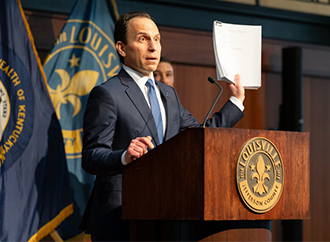
The educational piece of the puzzle seems to be missing. We want to restate, on May 21st, 2025 Donald Trump announced that the Department of Justice was pulling out of the lawsuit. This was the same day that Mayor Greenberg and LMPD chief Paul Humphrey presented the Community Commitment. The city held listening sessions, the city held the press conferences but many argued that one thing that was missing was the educational sessions by the city. On May 17th, 2025 just four days before Donald Trump announced that the DOJ was pulling out of the lawsuit, we sat down with the president of ELEFA, David Douglas for an interview. David stated that “I’m a big believer that reporting to the public and engaging the public can have a strong voice to ensure that the consent decree is implemented”. Without the educational piece of the puzzle in this process, is it possible for the public to truly be engaged in this process? Mr. Douglas went on to that “ELEFA’s mission is to help the public lead the process of achieving the kinds of policing practices they want through education, to help empower them to engage with their city and their police department.” On February 6th, 2026, the Kentucky Alliance Against Racist & Political Repression held its first of a 3 series of educational sessions focused on the community commitment. Although more educational sessions are said to take place, it is unclear to us now as to what date those will be. With community organizations leading the way with education it bears asking, is it up to the community to educate the community?
The word Community is referenced 141 times within the localized document. The ward community is simultaneously a vague and specific word/term. Within the document one could assume they are referring to the black community, the latino community, the amish community and more. Despite the lack of specificity, there doesn’t seem to be much within the document that allows community members to truly make a lot of change to it. This continues to build credence on the question, is this a process that is happening with community or at community?
Who Saves Us? We Save Us.
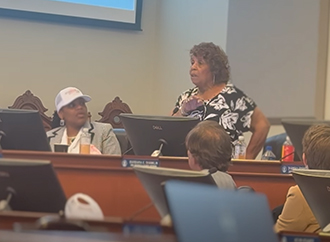
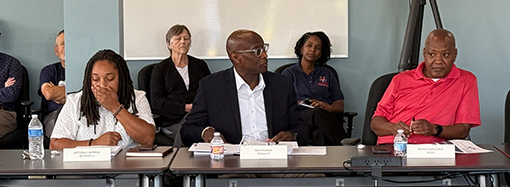
The Community Safety Commission meetings, although not marketed heavily to the public, are open to the public. We won’t go in depth and re-explain what the CSC is here because we explained that more in depth in our other article titled the Community Commitment and What You Should Know. The CSC has been attempting to find the best way for community outreach itself as they continue their path to support the Safety Plan and the implementation of the Community Commitment. The CSC has and are developing subcommittees which include an LMPD strategies subcommittee, Mental Health subcommittee and a youth violence prevention subcommittee.
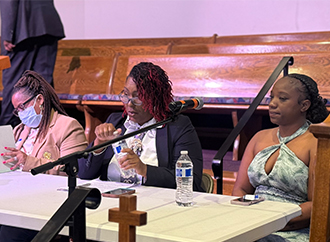
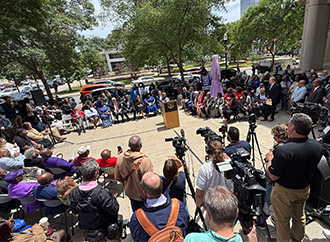
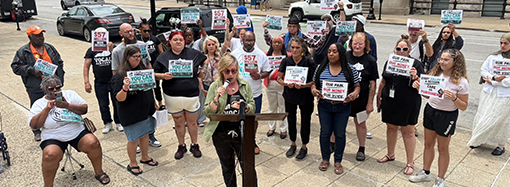
The Louisville Urban League, Inc. hosted Consent Decree to Community Power in collaboration with ACLU of Kentucky, Kentuckians For The Commonwealth, Black Leadership Action Coalition of Kentucky, Kentucky Alliance Against Racist and Political Repression and more. The focus of the meeting was to discuss codifying the Community Commitment. Although one harsh definition of the word codify is to “arrange (laws or rules) into a systematic code”. The main message with this event was to introduce to the public, the importance of codifying the community commitment into law so that the accountability could be more substantial and outlast the tenure of the current mayor and police chief who presented it. Ultimately, the organizers hope to help citizens hold their government and police department more accountable, should there be a reason to do so. The group encouraged those who attended to call their council person and tell them to codify the community commitment.
The educational piece of the puzzle seems to be missing. We want to restate, on May 21st, 2025 Donald Trump announced that the Department of Justice was pulling out of the lawsuit. This was the same day that Mayor Greenberg and LMPD chief Paul Humphrey presented the Community Commitment. The city held listening sessions, the city held the press conferences but many argued that one thing that was missing was the educational sessions by the city. On May 17th, 2025 just four days before Donald Trump announced that the DOJ was pulling out of the lawsuit, we sat down with the president of ELEFA, David Douglas for an interview. David stated that “I’m a big believer that reporting to the public and engaging the public can have a strong voice to ensure that the consent decree is implemented”. Without the educational piece of the puzzle in this process, is it possible for the public to truly be engaged in this process? Mr. Douglas went on to that “ELEFA’s mission is to help the public lead the process of achieving the kinds of policing practices they want through education, to help empower them to engage with their city and their police department.” On February 6th, 2026, the Kentucky Alliance Against Racist & Political Repression held its first of a 3 series of educational sessions focused on the community commitment. Although more educational sessions are said to take place, it is unclear to us now as to what date those will be. With community organizations leading the way with education it bears asking, is it up to the community to educate the community?
The word Community is referenced 141 times within the localized document. The ward community is simultaneously a vague and specific word/term. Within the document one could assume they are referring to the black community, the latino community, the amish community and more. Despite the lack of specificity, there doesn’t seem to be much within the document that allows community members to truly make a lot of change to it. This continues to build credence on the question, is this a process that is happening with community or at community?
Who Saves Us? We Save Us.
The Community Safety Commission meetings, although not marketed heavily to the public, are open to the public. We won’t go in depth and re-explain what the CSC is here because we explained that more in depth in our other article titled the Community Commitment and What You Should Know. The CSC has been attempting to find the best way for community outreach itself as they continue their path to support the Safety Plan and the implementation of the Community Commitment. The CSC has and are developing subcommittees which include an LMPD strategies subcommittee, Mental Health subcommittee and a youth violence prevention subcommittee.
The Louisville Urban League, Inc. hosted Consent Decree to Community Power in collaboration with ACLU of Kentucky, Kentuckians For The Commonwealth, Black Leadership Action Coalition of Kentucky, Kentucky Alliance Against Racist and Political Repression and more. The focus of the meeting was to discuss codifying the Community Commitment. Although one harsh definition of the word codify is to “arrange (laws or rules) into a systematic code”. The main message with this event was to introduce to the public, the importance of codifying the community commitment into law so that the accountability could be more substantial and outlast the tenure of the current mayor and police chief who presented it. Ultimately, the organizers hope to help citizens hold their government and police department more accountable, should there be a reason to do so. The group encouraged those who attended to call their council person and tell them to codify the community commitment.