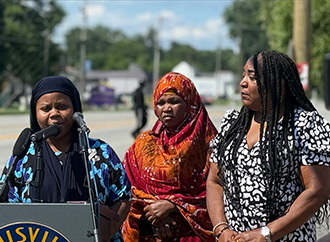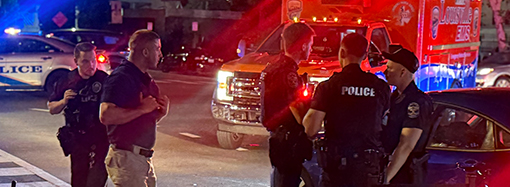

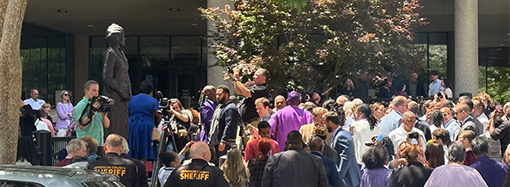

When local leaders stand behind a podium and announce that "crime is down," it is meant to sound like a victory. But for those of us living in Louisville's most impacted neighborhoods, hearing those words doesn't bring relief. Instead, it feels like a painful disconnect. We look at the news, walk our streets, and talk to our neighbors, only to see a relentless cycle of shootings, loss, and trauma.
When you are constantly losing young people, celebrating "progress" feels dangerously close to making light of a tragedy. It risks giving a false perception that everything is fine—when it clearly isn’t.
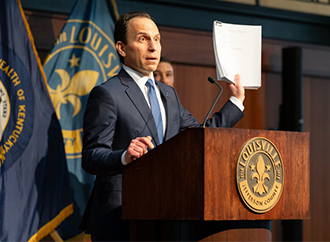
To understand why the Mayor's claims feel so hollow, we have to look at the actual data. In his recent Safe Louisville public safety report, Mayor Greenberg highlighted some significant percentage drops: A 22% drop in homicides compared to the previous year. 2024 - 144 2025 - 114. A 28% drop in non-fatal shootings, which the city notes is the lowest number of shootings in a decade. While any reduction in violence is a step in the right direction, presenting these drops as a mission-accomplished moment ignores the devastating baseline we are starting from.
“…as long as our homicide rate remains in the triple digits, we are in a state of emergency."
Even with a 22% decrease, Louisville’s annual homicide count remains firmly in the triple digits. In fact, with the exception of only two years, our city has recorded triple-digit homicides every single year since 2016. Between 2020 and 2025 alone, nearly 900 people were killed in our city, and more than 2,700 survived non-fatal shootings. A statistician might call a drop from 144 to 114 "encouraging progress." But to a mother, a sibling, or a classmate, 114 homicides is not a success story. It is a catastrophe.
Why the Rhetoric Feels Dismissive: Announcing that "crime is down" without centering the immense weight of the loss still occurring is dangerously close to being dishonest. It creates a narrative that the issues are being resolved, which can lead to complacency. Most importantly, this kind of framing is deeply dismissive to the families who have been directly impacted by gun violence recently and over the years. When a family is grieving with a freshly broken heart, being told that the city is safer than it was last year doesn't heal their pain. It only makes them feel invisible. We cannot allow percentages to mask the human faces behind them. Every decimal point in a city safety report represents a child, a student, a friend, and a future that was stolen from our community.
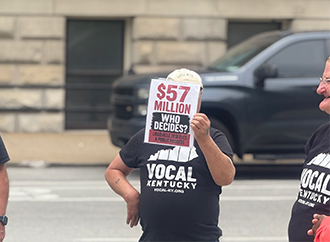
Defunding the Real Solutions: The Budget Disconnect: The disconnect isn’t just in how the city talks about crime—it is in how they fund the fight against it. In the recently approved city budget, despite the flowery language about "supporting families," critical funding for youth engagement and grassroots programs took a back seat. While millions are funneled into reactive policing and municipal databases, the vital funds that keep neighborhood-level programs running are being squeezed or left out entirely. When city leaders drop funding for grassroots organizations and youth sports programs, they are cutting off the oxygen to the actual solutions.
Youth Sports Are More Than Just Games: For many of our young people, a local football, basketball, or track team is a lifeline. These sports programs are where they find safe spaces after school, positive adult mentors who act as father and mother figures, and a sense of belonging. Grassroots groups do the heavy lifting. Local, neighborhood-led organizations don’t operate from high-rise offices. They are on the block, directly intervening in conflicts, feeding families, and guiding teenagers through trauma. You cannot claim you are "resolving issues concerning violence" while defunding the frontline workers who actually prevent it.
If city leadership wants to build genuine trust, they must stop using statistics as a shield. We need, Honest transparency. Acknowledge that as long as our homicide rates remain in the triple digits, we are in a state of emergency.
Action Over PR: Focus less on press briefings celebrating progress and more on deep, sustained support for the grassroots organizations, youth programs, and families carrying the weight of this trauma every single day. True safety is not the absence of crime; it is the presence of opportunity. If the Mayor and Metro Council want to see homicides drop below triple digits, the solution isn't just more patrol cars or high-tech surveillance database systems. The solution is actively investing in our youth. We need to reverse these budget priorities. Every dollar cut from a grassroots youth initiative is a dollar we will eventually pay tenfold in the justice system. It’s time for city hall to back up its statistics with its checkbook. Our young people deserve to grow up in a city where safety isn't just a talking point on a slide deck—but a reality they can actually feel when they step outside.